How student debt is draining families in the South across generations
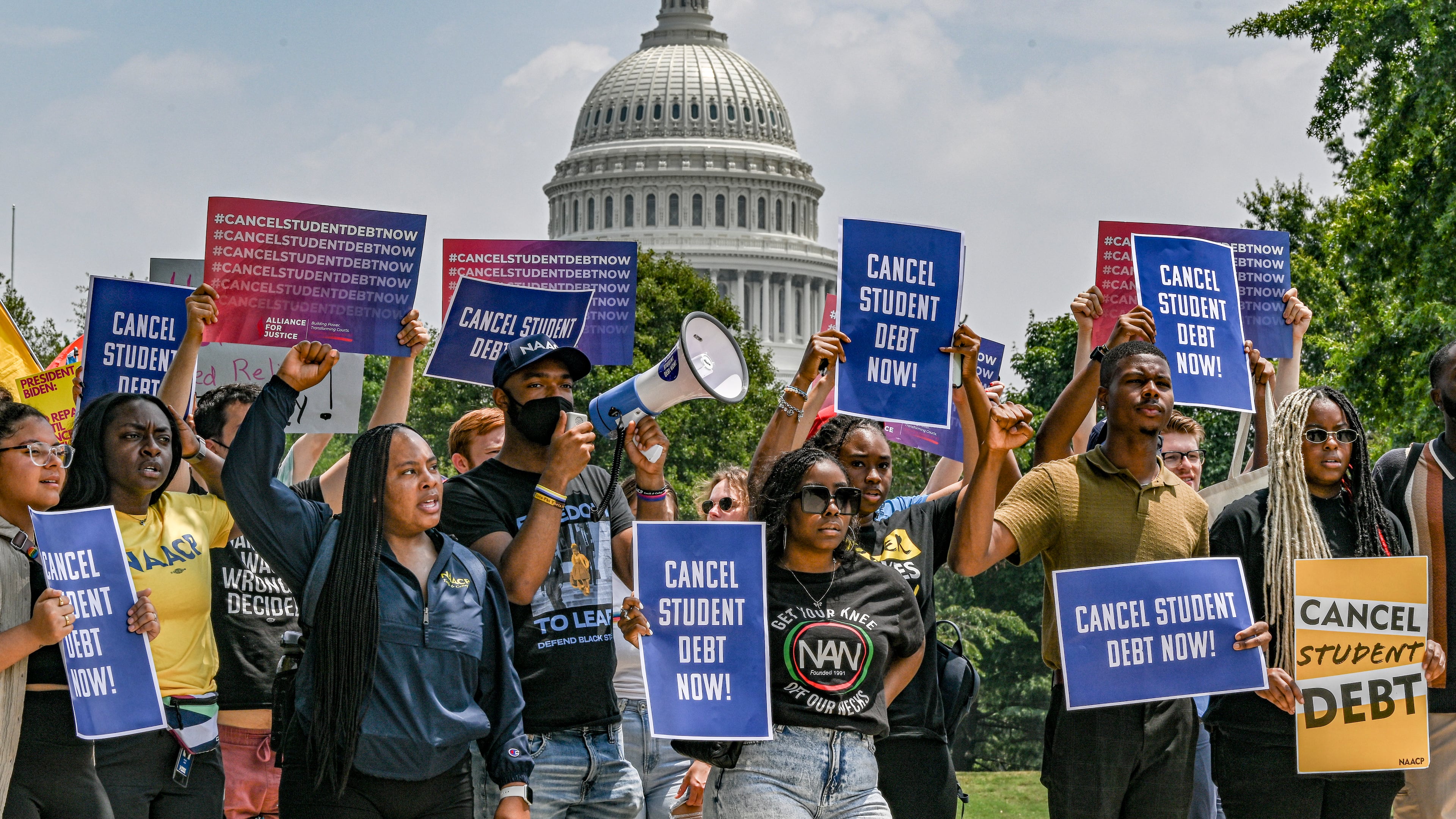
“When the country catches a cold, Black people catch the flu. It’s just exacerbating the existing racial wealth gap.” — Jenna Bryant, senior program director, MDC, drawing on a widely recognized saying frequently attributed to civil rights leaders
In Georgia right now, this describes the student debt crisis with uncomfortable precision.
According to Protect Borrowers, Georgia ranks among the five states with the worst student loan delinquency rates in the United States, alongside Louisiana, Mississippi, Alabama, and South Carolina.
Across those five states, more than 1.8 million people are currently facing credit destruction, collections, and potential wage garnishment. And those numbers are almost certainly undercounts: Delinquency rates are calculated only against borrowers currently in repayment. Millions more haven’t re-entered repayment yet. They will.
This gap is not poverty, or geography. It is the predictable consequence of what this country decided, legally and deliberately, certain communities were not allowed to build, and of what Georgia’s Legislature has consistently chosen not to do about it.
The debt gap did not start with a loan application. Research by Dr. William Darity and colleagues at Duke University finds that Black students are more likely to borrow more and more likely to drop out due to financial pressure before receiving a diploma. Among those who do graduate, Black students leave with an average of $7,400 more in debt than their white peers.
According to the Brookings Institution, that gap triples to $25,000 within four years of graduation. Two decades after taking out loans, the median Black borrower still owes 95% of their original debt. The median white borrower has paid off 94%.
These are not stories of poor financial decisions. They are the arithmetic of a system built on top of centuries of deliberate wealth extraction — slavery, exclusion from the GI Bill, redlining, predatory lending — in which student debt is simply the latest mechanism. When the only thing a family has left to pass down is someone else’s debt, the racial wealth gap deepens.
Nineteen states have acted; Georgia has not


Since 2014, 18 states and Washington, D.C., have enacted a Student Loan Borrower Bill of Rights. These laws license servicers, establish an ombudsman to handle complaints, prohibit abusive collection, and create a private right of action with fee-shifting, enabling low-income borrowers to access legal representation without upfront cost.
Critically, for private loans, which carry none of the federal protections most people assume apply. The private student loan market now stands at nearly $130 billion, surpassing the payday loan market in size, growing faster than auto loans, credit cards, and mortgages. Some 93% of outstanding private loans are cosigned, with 57% of those cosigners aged 55 and above. For families with little inherited wealth, the risk does not stay with the borrower. It travels.
Georgia has not passed this legislation. Every Georgian Legislature has had access to the same model legislation the other 19 states used. It is not a resource gap. It is a choice.
Georgia’s tax treatment compounds the problem. The state’s date-specific conformance laws mean borrowers cannot know in advance which tax year will govern their forgiveness, or how much they will owe when it arrives. People who spend decades in income-driven repayment, doing everything right, reach forgiveness with a tax bill they couldn’t plan for.
These are the 18 states (plus D.C.) that have enacted a Student Loan Borrower Bill of Rights:
- California
- Colorado
- Connecticut
- District of Columbia
- Illinois
- Kentucky
- Louisiana
- Maine
- Maryland
- Massachusetts
- Minnesota
- Nevada
- New Jersey
- New York
- Oklahoma
- Oregon
- Rhode Island
- Virginia
- Washington
Bill in Congress would remove hardships for borrowers


The solutions exist. At the federal level, House Resolution (H.R.) 423 would remove the near-impossible undue hardship barrier currently required to discharge private student loans in bankruptcy.
As Jenna Bryant, senior program director at MDC, notes: the barrier is so high that student loan discharges in bankruptcy often simply do not happen.
The bill currently has five Democratic cosponsors in addition to sponsor Rep. Steve Cohen, D-Memphis, and no Republican support.
The Georgia General Assembly could pass a Student Loan Borrower Bill of Rights tomorrow. It has chosen not to.
The five states with the highest student loan delinquency rates are the same five states where getting out is most expensive, most unpredictable, and least protected. That is not a coincidence.
It is a pattern — and it is falling, as it always has, on the same communities.
“We sort all the careers that need the most education into this bucket that makes less money,” says Sabrina McGee, a partnership manager at MDC. “It’s primarily women working in caring professions — and primarily Black women in a lot of cases.” Those women are Georgia’s nurses, teachers, and social workers. They are also the people this system is failing most completely.
Georgia did not create this history. But it is choosing, right now, whether to perpetuate it.
Harrison Dale is a program administrator at MDC focused on advancing racial equity and economic mobility, drawing on his background in public education, legal work, and grassroots advocacy to support programs addressing systemic injustice.
Jenna Bryant is senior program director of economic security and mobility at MDC, where she leads initiatives advancing economic opportunity and equity for low and moderate income communities across the South.
Sabrina McGee is a program manager with MDC’s Rural Forward program, supporting rural communities in North Carolina through capacity-building and technical assistance to advance equitable economic development.
Phillip Sheldon is a program director at MDC, working to strengthen Southern organizations and leaders through strategic planning and capacity-building in pursuit of greater economic and racial equity.
MDC researches and collects economic and demographic data across the South
Send letters to the editor of 250 words or fewer with your name, city or town and contact information to letters@ajc.com.