Liberal arts still matter to students and are valuable for Georgia’s workforce
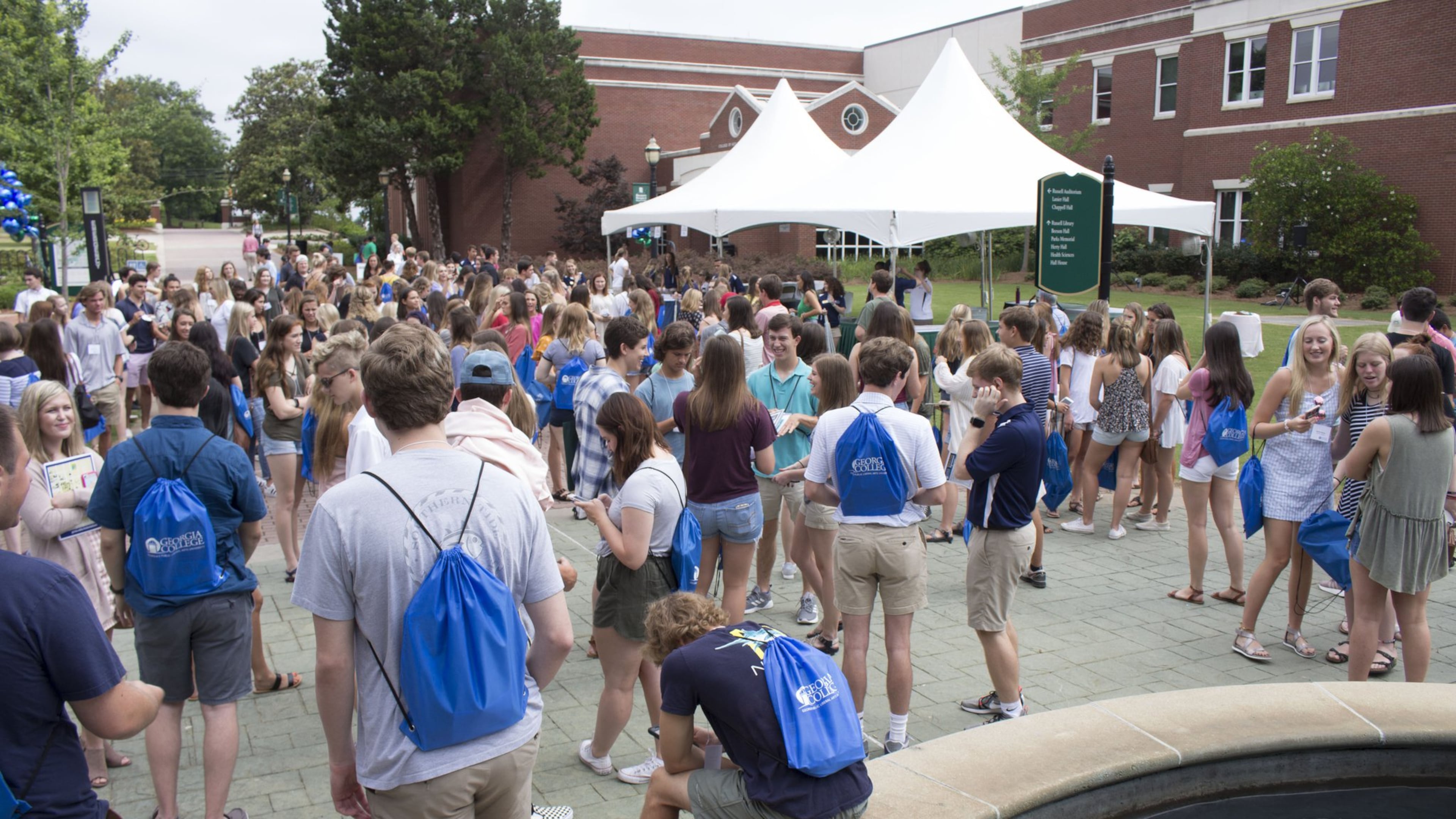
Thirty years after Georgia made a landmark commitment to public liberal arts education, students are affirming the wisdom of that decision in record numbers.
This fall, Georgia College & State University welcomed its largest-ever incoming class of 1,849 students from a record pool of 10,060 applicants, some 95% of whom are Georgia residents.
That will bring GCSU’s overall enrollment this fall to an all-time high of nearly 7,500 undergraduate and graduate students. Our fourth consecutive year of unprecedented demand, this growth serves as powerful evidence that, as markets move and student expectations rise, a high-quality liberal arts education remains more relevant than ever.
The reason is adaptability.
Employers want workers who participate in experiences
Regardless of field, mastering the skills central to the liberal arts - critical thinking, communication, teamwork, problem-solving - serves graduates well. Those competencies adjust to emerging technologies and roll with the tides of industry shifts.
Workforce data reinforces the point.
According to the American Association of Colleges and Universities, employers are up to 81% more likely to hire graduates who have participated in experiences such as undergraduate research, internships, study abroad, leadership programs and community-engaged learning because it is through experiences like these that students learn broader analytical and interpersonal skills.
At Georgia College, 93% of students report taking part in experiences like these - beginning in their first year.
Opportunities to learn by doing as a freshman or sophomore are not typical at larger universities. By keeping classes small, though - 75% of courses at Georgia College have fewer than 30 students - scholars get unparalleled access to their professors and to hands-on learning experiences inside and outside of the classroom.
Our recent Research Day offered a snapshot of these benefits. The largest event of its kind in GCSU history, this event showcased nearly 300 student-researchers who, guided by faculty mentors, learned through their work how to investigate, collaborate, test ideas, respond to feedback and explain their conclusions. Those are liberal arts - and workforce-ready - skills.
The emphasis on experiential learning is also reflected in the GCSU curriculum, which is offered exclusively in-person during the regular fall and spring semesters. Our students want to be face-to-face with their professors and classmates for robust discussions on course topics.
Graduate degree in AI strategy exceeds expectations
Our new master of science in AI Strategy degree makes a similar case.
It’s not a degree that teaches students how to develop AI programs. Pairing software fluency with ethical decision-making and responsible AI practices, the program takes a holistic view of a technology that is fundamentally changing the way we work. And again, demand has been staggering.
Only two months after announcing the program, we enrolled more than 400% of our first-term goal - a target of eight students set by the University System of Georgia. By combining broad liberal arts perspectives with AI tools, this degree will empower graduates to leverage AI effectively in any sector.
Before the Board of Regents designated Georgia College as the state’s public liberal arts university in 1996, Georgia had no public institution dedicated to this learning model, which meant that students seeking such an education often had to leave the state — if they could afford to do so. The Regents saw a public need and entrusted Georgia College to meet it.
Three decades later, that trust has yielded remarkable results.
The student profile at GCSU has strengthened significantly as it became one of the three selective admission universities in the state (along with UGA and Georgia Tech). The economic impact the university generates in Middle Georgia has more than doubled, exceeding $360 million today. We also now rank among the top five public colleges and universities in the 12-state South region by U.S. News & World Report.
The state’s decision 30 years ago to entrust Georgia College with this noble mission created an affordable pathway to an education tailored to an ever-changing world. Here at GCSU, we like to say that “it’s different here” — because a liberal arts education is different. Here, students learn to be leaders. They develop the skills they need to do more, learn more and seize more opportunities to make a positive difference in their communities.
Georgia students have responded enthusiastically, and we look forward to carrying out this mission for decades to come, while providing the launching pad needed to propel future generations toward passionate and purposeful lives.
Cathy Cox is the president of Georgia College & State University and a former two-term Georgia Secretary of State.
Send letters to the editor of 250 words or fewer with your name, city or town and contact information to letters@ajc.com.
Correction
September 1, 2026This column has been updated to correct that Georgia College & State University adopted its current liberal arts mission 30 years ago.