Burning Canada, Georgia’s best customer, is bad for U.S. business

Let’s clear the air about the stalled trade negotiations between the U.S. and Canada.
Nations don’t trade with each other. Businesses do.
Businesses seek to purchase and sell the best product at the best price, whether the vendor is down the road or across the border.
When Georgia pecans go to a grocery chain in Florida, it’s just called doing business. If the grocery chain is in Ontario, it becomes international trade.
Governments get involved when they impose taxes called tariffs on goods coming from another country. Japan protects rice farmers. The U.S. protects sugar and cotton farmers and steel and aluminum producers. Canada protects dairy farmers.
Trade agreements negotiate removal of tariffs to get governments out of the way so private businesses can buy and sell without government interference.
U.S.-Canada trade explained

In 2025, U.S. companies exported $333.6 billion of goods to Canada and imported $381.9 billion of goods from Canada.
That means we import $48.3 billion more than we exported. President Donald Trump says that trade deficit means Canada is “ripping off” the U.S. He’s wrong.
U.S. businesses purchase Canadian products because they meet the technical specs and at the best price — including $85.4 billion in Canadian oil. Without that oil, the U.S. would have had a trade surplus with Canada. Wouldn’t you rather import oil from dependable, reliable Canada than from problematic countries further away?
Canada is Georgia’s largest customer. In 2025, Georgia businesses exported $6.8 billion in goods to Canada. No business executive would insult and threaten their most important customer, but that is exactly what the United States is doing.
“We don’t need anything Canada has.” Trump has repeatedly said the U.S. doesn’t need anything from Canada. That’s true if we are willing to pay higher prices for similar products from elsewhere. Canada provides 60% of the aluminum we use in everything from dishwashers to cars to building facades. And 90% of the potash U.S. farmers use to fertilize their fields. Much of the lumber and plywood used to build U.S. homes comes from Canada. If you want to replace your deck, buy blueberries in the late summer when they are out of season here, or replace your fridge, you need Canada.
I’m still looking for that Canadian car. The president has said we don’t need Canadian cars. There is no “Canadian car” competing with U.S.-produced vehicles. Ford, GM and Stellantis make their cars and trucks on both sides of the border in order to supply both the U.S. and Canada.
The vehicles are identical whether they are assembled in Michigan or Ontario. That Jeep or Silverado assembled in Canada generally has about 60% U.S. content.
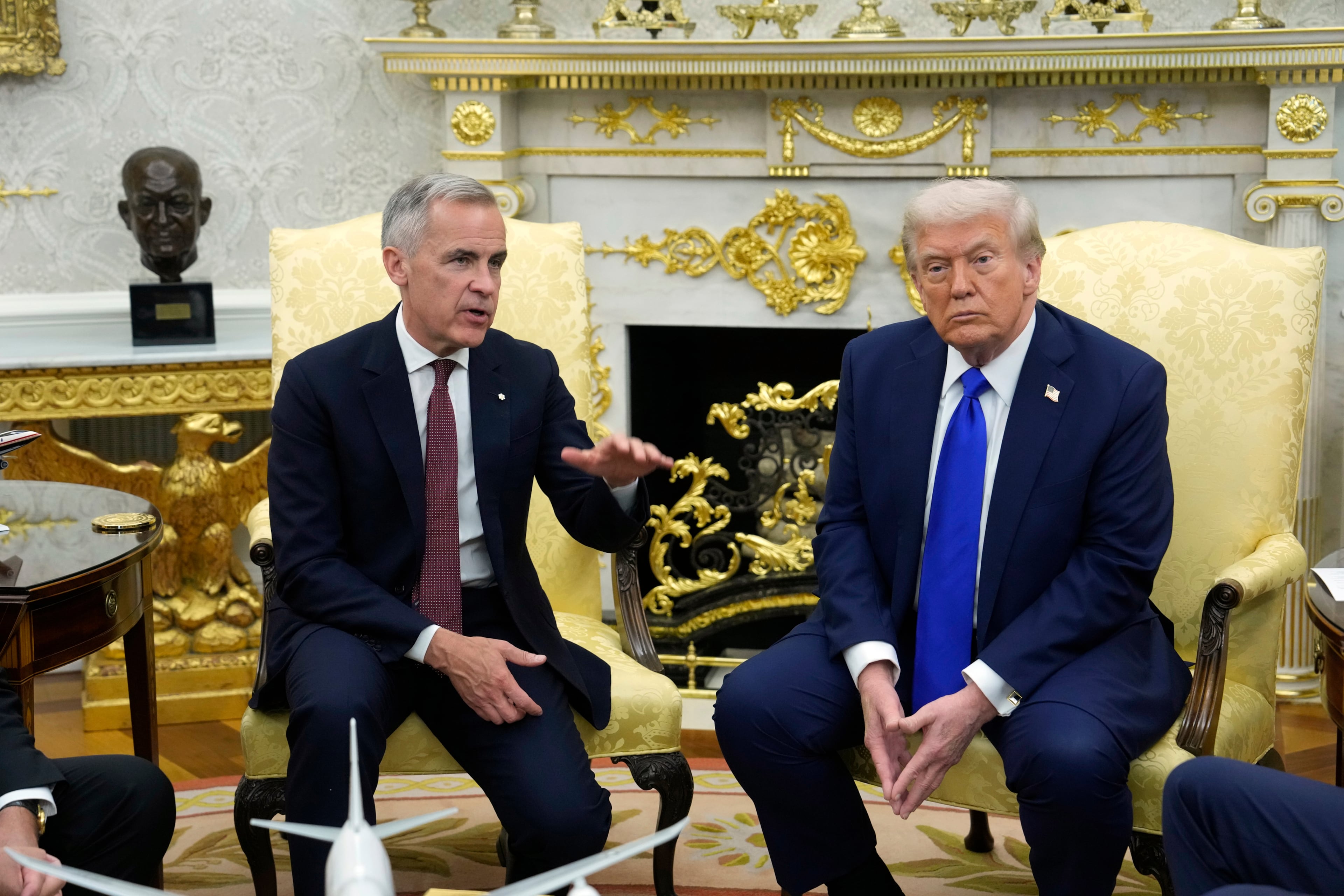
Enough jokes — and insults
- Labeling Canada the 51st state? Offends every Canadian to the core.
- Renaming the U.S. portion of Lake Ontario as Lake America? Silly.
- Treasury Secretary Scott Bessent demeaning the Canadian military? Insulting and irrelevant.
- Defense Secretary Pete Hegseth body-shaming Canadian teenagers? Bullying.
- Trump saying that the Canadians are “nasty” and harder to negotiate with than the Chinese? Really?
- The cartoon posted with him thrashing Canadian Prime Minister Mark Carney with a hockey stick? Pointless.
As a result, angry Canadians are boycotting the U.S. Canadian tourism in the U.S. was down 25% in 2025. That’s $1.7 billion that Canadians did not spend here.
- What happened? U.S. Trade Representative Jamieson Greer and his Canadian counterparts were near an agreement and were meeting for a final session on Aug. 18. At the 11th hour, Commerce Secretary Howard Lutnick joined the negotiations for the first time and introduced a number of new demands. Carney assessed that they were unacceptable and ordered his delegation home.
- What’s next? An agreement is in the interest of both countries. It’s time to restart negotiations away from the political theater. And without Secretary Lutnick. We need to reach an agreement that strengthens the competitiveness of both countries.
U.S. businesses, and especially the CEOs of the auto manufacturers, need to tell their elected representatives that enough is enough. Georgia Gov. Brian Kemp and other Republican governors need to get that message to the president and his team. As do the GOP senatorial candidates in Ohio, Maine, Michigan, Alaska and Kansas.
Ours is an unequal relationship: 72% of Canadian exports go to the U.S. while only 15% of U.S. exports go to Canada. But it doesn’t serve U.S. interests to squeeze out the last drop of advantage as if Canada were our enemy. Canada is not just a neighbor. It is a supplier, an investor, an ally — and America’s best customer.
As a former diplomat, I never thought I would see the day when Canada and Denmark are our enemies and China and Russia are our friends. When I taught international business, I never thought a U.S. president would consider trade to be a zero-sum game.
Burning your best customer is bad business.
Charles Shapiro is a retired career diplomat who served as U.S. ambassador to Venezuela 2002-2004 during President George W. Bush’s administration. Shapiro taught international business at the Robinson College of Business at Georgia State while he was president of the World Affairs Council of Atlanta. He is a professor of practice at the Nunn School at Georgia Tech. He delivered the Atlanta Journal in 1961.
Send letters to the editor of 250 words or fewer with your name, city or town and contact information to letters@ajc.com.