15 years ago, HOPE scholarship reform drove rural and urban Georgia apart

For the first 16 years of its existence, Georgia’s HOPE scholarship program did something unusual for a state entitlement: It tilted toward the people who needed it most.
From 1995 through 2011, the 147 counties outside metro Atlanta’s core counties — sparsely populated rural communities and the state’s regional hub cities — produced substantially more HOPE scholars than the Atlanta region.
In 1995, those counties were home to about 58% of the state’s population and produced nearly 70% of the first full HOPE class.
By 2011, they were still generating 64% of the state’s scholars and receiving 55% of HOPE dollars.
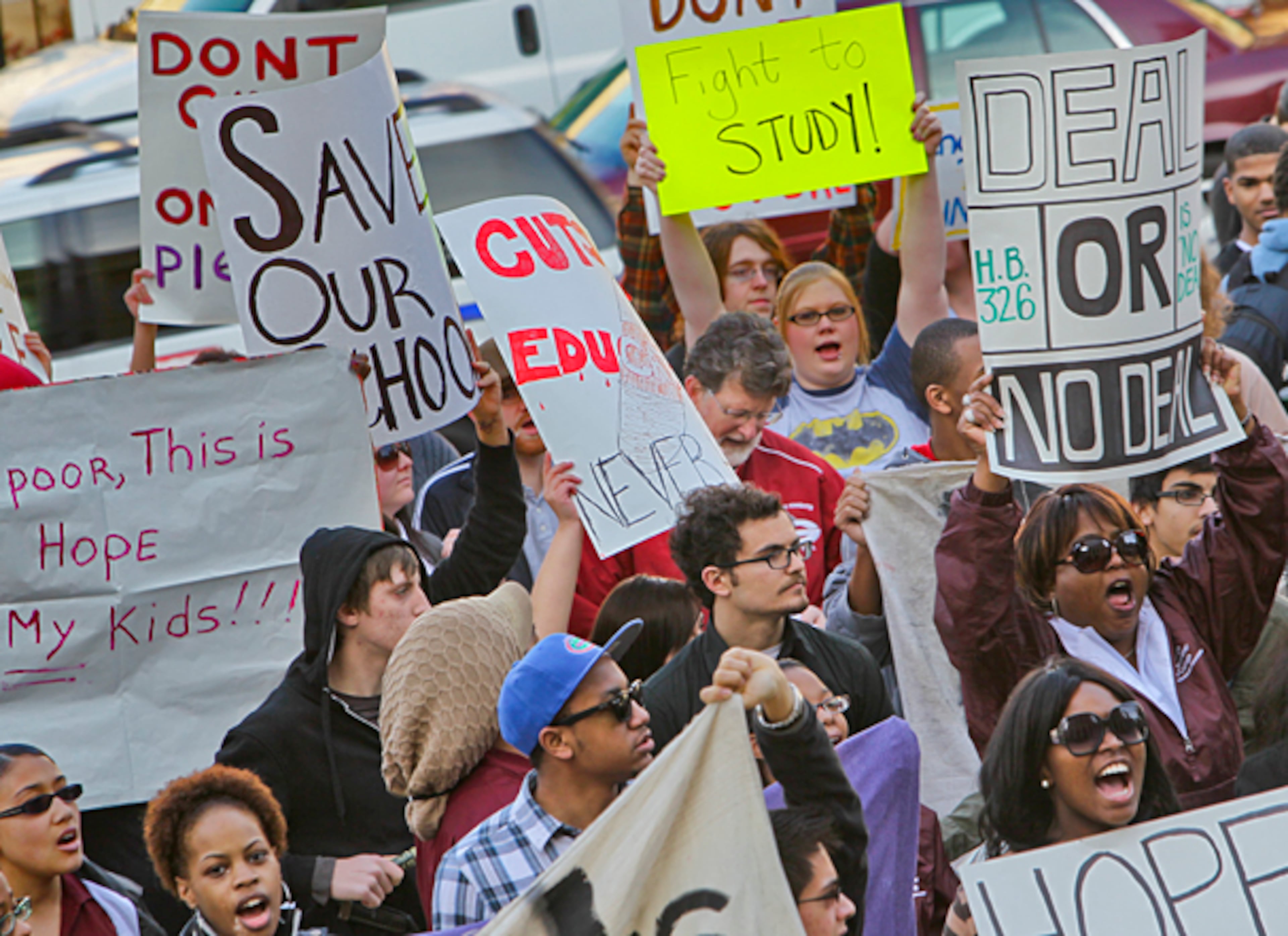
Then came House Bill 326.
Passed by the General Assembly and signed by Gov. Nathan Deal in March 2011, HB 326 was sold as an act of fiscal necessity. The Georgia Lottery — HOPE’s funding source — was projecting a $243 million deficit for fiscal year 2011 and a $317 million shortfall by 2012. Deal’s framing was blunt: Reduce HOPE or lose it.
So, the legislature reduced it. The new law decoupled scholarship awards from actual tuition, stripped book and fee coverage, added rigorous course requirements, and — most consequentially — raised the GPA requirement for the HOPE Grant, which serves technical college students, from 2.0 to 3.0. Approximately 9,000 technical college students lost their grants almost overnight.
Legislature passed bill in spite of warnings
The legislators who passed HB 326 were by and large rural Republicans who represented rural Republican areas. They believed they were making a hard but responsible choice. What they did not appear to consider was who would bear the cost.
They were, however, warned. Vincent Lloyd and Devin Fergus, professors at Georgia State and Emory universities, tried to sound the alarm in a March 2011 guest opinion column in the AJC: “While 40% of students from Alpharetta High School would qualify for full scholarships based on the SAT requirements, just 1.8% of students from Meriwether County would qualify (about two students total last year).”
Their conclusion: “Our resources would be better directed at those thousands of students from rural Georgia and from working-class families whose lives will be dramatically changed for the worse if HOPE is taken away.”
The legislature passed the bill anyway.

The data that has accumulated in the 14 years since makes the cost unmistakably clear. In the year after HB 326 took effect, Georgia’s smallest counties — those with fewer than 35,000 residents — lost 23.4% of their HOPE scholars in a single year. The state’s largest counties lost 16%. For metro Atlanta, the hit was just 13%. The penalty was inversely proportional to county size: the smaller and more rural the county, the harder the blow.
But the immediate shock was only the beginning. Metro Atlanta recovered. The rest of Georgia still hasn’t. By 2025, metro Atlanta’s 12 counties had climbed back to their 2011 HOPE peak and beyond. The other 147 counties were still 63,000 HOPE scholars below their 2011 high-water mark. Metro Atlanta’s share of HOPE dollars, which stood at 45% in 2011, had risen to 56% by 2025, according to records I requested from the Georgia Student Finance Commission.
Without metro Atlanta, Georgia is near the bottom educationally
The political irony of this outcome is stark. Consider Georgia’s five most Republican counties — Banks, Brantley, Echols, Glascock and Pierce, all rural, all delivering about 90% of their votes to Republican candidates in 2024. Since HB 326 passed, those counties have seen their combined HOPE scholar production fall nearly 38% — from 1,699 scholars in 2011 to 1,058 in 2025.
Based on data from the American Community Survey, metro Atlanta’s educational attainment numbers put it on a par with the best-educated states in the nation; the other 147 counties, were they a state unto themselves, would come in next to last, behind Mississippi but ahead of West Virginia. The state’s 103 smallest counties would, collectively, trail Puerto Rico.
The Georgia Lottery’s reserve fund stands at $2.5 billion “with $1.7 billion of those funds unrestricted and available for appropriation,” according to the Georgia Budget and Policy Institute, an Atlanta-based nonprofit research center.
While that surplus was building, tens of thousands of young Georgians — most of them rural, most of them from families without the resources to fill the gaps that HOPE once covered — missed their chance at a higher education.
What’s more, HB 326 can now fairly be seen as a critical inflection point in modern Georgia history, one that landed squarely in the divide between the two Georgias and has driven them further and further apart. In the wake of HB 326, rural Georgia has lost ground not only educationally, but in terms of economics and population health.
In a real sense, Georgians outside Atlanta have been robbed of HOPE and hope.
Charles Hayslett is a retired public relations executive and long-ago political journalist now working on a book about the death of rural Georgia. He blogs about the issue at www.troubleingodscountry.com. This article first appeared, in longer form, on his blog.
Send letters to the editor of 250 words or fewer with your name, city or town and contact information to letters@ajc.com.