In Democrats’ ‘civil war,’ voters prefer moderates over progressives
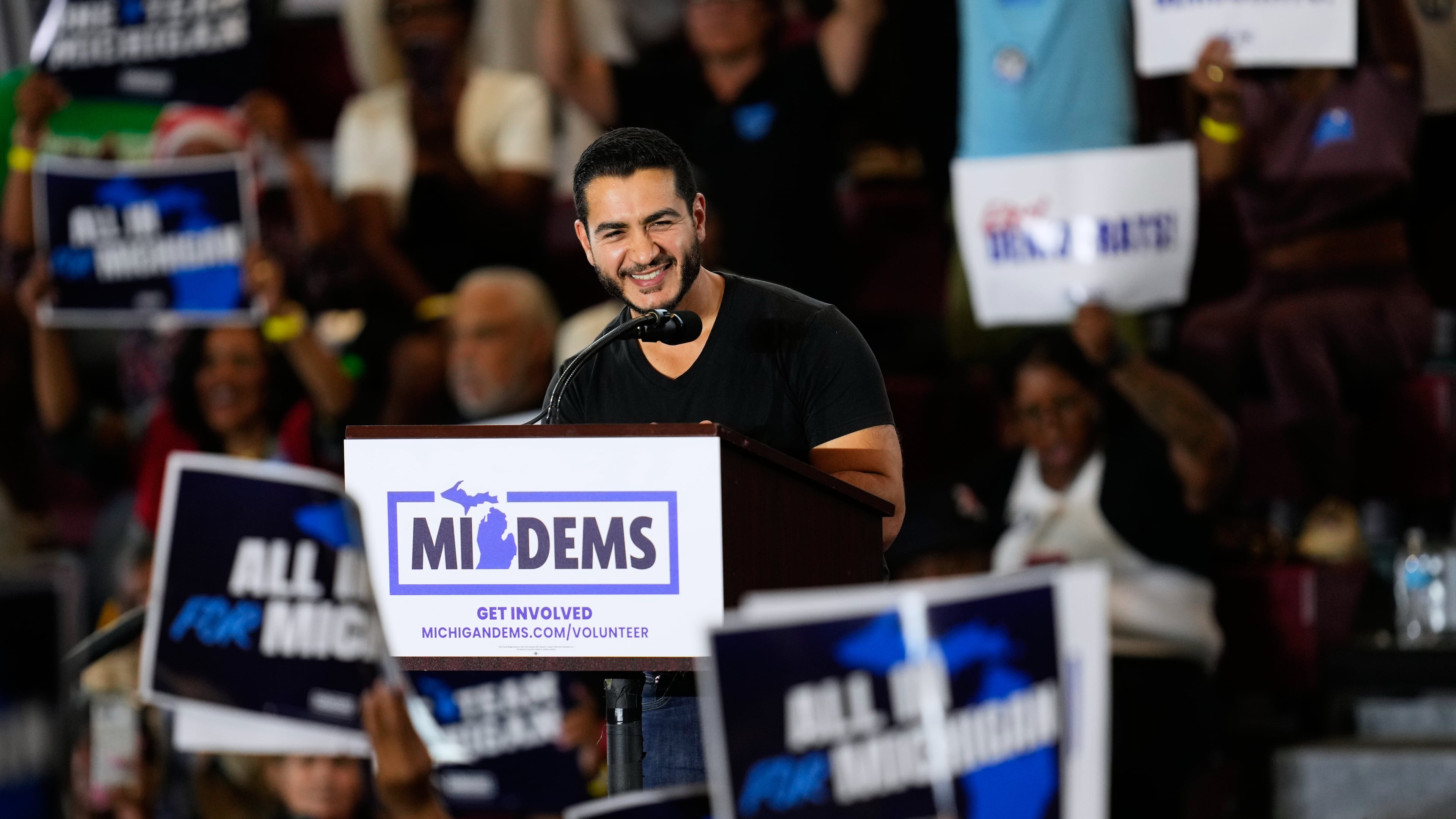
After Dr. Abdul El-Sayed’s narrow win over U.S. Rep. Haley Stevens in Michigan’s Democratic Senate primary and a string of contested races between “progressive” and “moderate” Democrats, members of the press are increasingly talking about a “civil war” between the party’s two wings.
Sounds like a plan. The sooner the Democratic Party recenters itself around the shared values and pragmatism of the American people, the sooner it can start actually winning elections.
Ideally this will force Republicans back to the reasonable center and allow all of us to take a much-deserved break from the news. A girl can dream.
To start, let’s disentangle some misconceptions about the Democratic establishment and why Democrats have been losing elections.
Democrats have not been losing because they have been too moderate or too short on big ideas. They have been losing because they have run too far to the left on social and economic issues alike — big ideas notwithstanding.
Moderates want to solve problems not be performative

In the Stevens–El-Sayed race, Stevens was cast as the moderate backed by the establishment, and El-Sayed as the progressive standing against it. That framing has led to a misconception that the Democratic leadership is itself “moderate.” Not exactly
The leadership of the Democratic Party is not particularly affiliated with the moderate wing of the Democratic Party.
From Senate Minority Leader Chuck Schumer, D-N.Y., and House Minority Leader Hakeem Jeffries, D-N.Y., to 2024 presidential candidate and former Vice President Kamala Harris, D-Calif., and former Speaker of the House Nancy Pelosi, D-Calif., almost the entire leadership of the Democratic Party is or has been drawn from the party’s liberal and progressive wings.
None have come from or are affiliated with the moderate Democratic Blue Dog Coalition.
But they rightly believe that they have to do business and compromise with moderates to win elections and to hold a majority in the House and Senate. By moderate in this context, I mean candidates who work with both parties on legislation and do not take extreme positions on economic or social issues.
U.S. Reps. Tom Suozzi, D-N.Y., and Adam Gray, D-Calif., recently laid out their vision of a moderate Democratic platform — the “Promise to America” pledge — built around capitalism over socialism, fiscal responsibility, secure borders and safe communities, effective government, political moderation and patriotism.
You see these kinds of policies reflected in the bipartisan Problem Solvers Caucus agenda, in the Democratic Blue Dog Coalition and in the Republican Main Street Caucus, the “moderate” caucus on that side of the aisle. Though for Republicans, perhaps the single most important signifier of being a moderate is a willingness to say “no” to President Donald Trump. —
A candidate perceived as an authentic moderate is more likely to win in closely divided districts and states, because independents and voters who skip primaries favor those candidates.
There is plenty of anecdotal evidence for this, and there is quantitative evidence too.
Split Ticket’s “wins above replacement” model, which measures how candidates perform against what a generic candidate should have done given seat partisanship, incumbency and money, found Blue Dog incumbents overperforming by nearly 4 points on average from 2018 through 2024.
Members backed by Justice Democrats and Our Revolution — both progressive PACs — underperformed by roughly 5 points. The Main Street Republicans showed a similar pattern on the other side, while the conservative and right-wing Freedom Caucus ran behind.
Republicans prefer to run against far-left candidates
Knowing this is why the Democratic establishment tried so hard to put a thumb on the scale for Stevens in Michigan, which is a swing state and critical to Democratic chances in retaking the Senate.
Stevens is a tough, battle-tested candidate whose resume includes serving as chief of staff to the White House Auto Task Force that rescued Michigan’s auto industry during the Obama administration.
She has won several difficult general elections and some hard primaries. This doesn’t mean El-Sayed will lose — but he almost certainly has a steeper hill to climb than Stevens would have.
Mike Rogers, El-Sayed’s Republican opponent, lost the state’s 2024 Senate race by less than half a point — but against the very moderate Elissa Slotkin. Democratic leadership did not similarly intervene in the moderate vs. progressive U.S. Senate battle in Minnesota (where the progressive, Lt. Gov. Peggy Flanagan, prevailed over U.S. Rep. Angie Craig) because Minnesota is almost certainly a Democratic state so it doesn’t matter if a progressive prevails in the primary.
The moderate-vs.-progressive effect is well enough known that Republicans will put money behind progressive candidates in primaries in competitive districts.
Something like that may have just happened in Michigan’s 7th Congressional District, one of the most competitive House seats in the country, where around $1 million from a mysterious, Republican-linked group called Michigan Sunrise PAC boosted William Lawrence, a co-founder of the far-left environmental Sunrise Movement, and attacked his more moderate rivals.
Lawrence won the primary and now faces Republican incumbent U.S. Rep. Tom Barrett in a seat Cook rates a toss-up. The same tactic runs in reverse: Democrats have repeatedly boosted the more extreme or more pro-Trump Republican in a primary in hopes of an easier general election.
I’m also seeing it said that this year’s generational change maps onto progressive versus moderate. Not really. Most of the incumbents losing are themselves older progressives — U.S. Reps. Diana DeGette, D-Colo., John Larson, D-Conn., and Adriano Espaillat, D-N.Y.. In some cases the issue is age, and in a few cases they are being outflanked on the left by democratic socialists.

Last, I keep seeing the claim that Harris lost the last presidential election because she was a moderate. Not correct.
She tried to pivot to the center, certainly — but she was saddled with an inflationary economy that voters widely blamed on Biden era federal spending, and she had taken a number of very progressive positions on crime, immigration and LGBTQ+ issues during the 2020 campaign that came back to haunt her in 2024.
Trump didn’t win in 2024 because he was particularly popular. Gallup polling showed him with one of the worst favorable/unfavorable ratings of any candidate. He won because the American public disliked Biden-era left-wing policies more than they disliked Trump (48% moderately or highly unfavorable rating). Harris’ unfavorable ratings — at 50% — were worse!
As we head into the 2026 midterms and look ahead to 2028, everyone should sit with that for a minute — and then decide whether the Democratic Party should move further left or become more moderate.
Carolyn Bourdeaux is a former Democratic member of Congress from Georgia’s 7th District. She is a contributor to the AJC.
Send letters to the editor of 250 words or fewer with your name, city or town and contact information to letters@ajc.com.