Deficiencies at Georgia war veterans home require immediate action
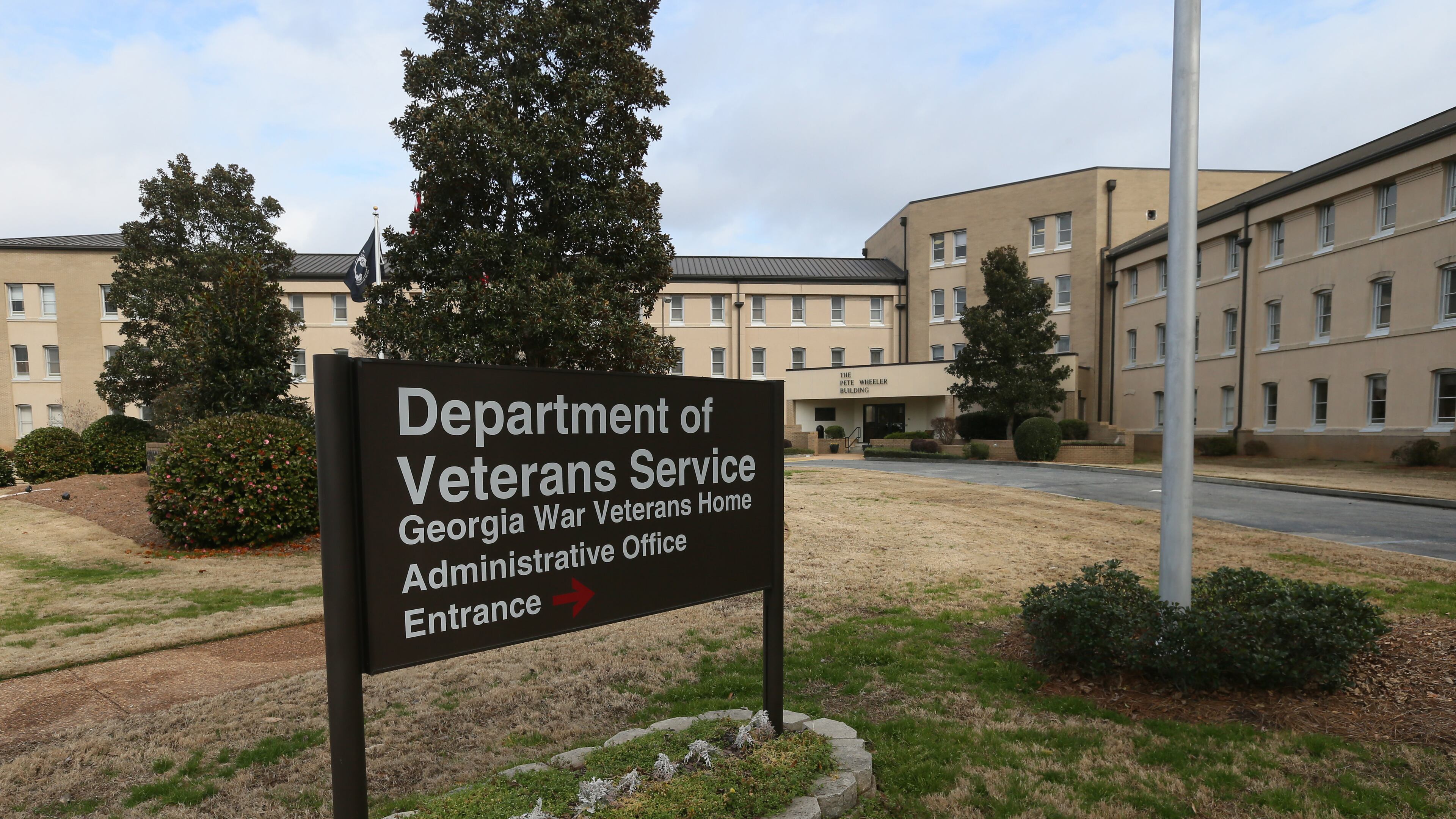
Georgia veterans in state nursing care are living in inadequate and hazardous conditions, and Gov. Brian Kemp must do something about it.
The Georgia War Veterans Home in Milledgeville (GWVH) is a 248-bed skilled nursing care facility for aged and infirm veterans.
It is the responsibility of the Georgia Department of Veterans Service (GDVS), which is overseen by a governor-appointed State Veterans Service Board (VSB).
In August 2024, Russell Feagin, the GDVS executive director of health and memorials, told the state Senate Study Committee on Veterans’ Mental Health & Housing that eight to 10 veterans called daily asking for help but were turned away.
“And the answer is no. We can’t because of our funding limitation. And we are limited to number of veterans, we can admit to totally into the facility,” Feagin told senators.
VA surveys show significant problems annually

The U.S. Department of Veterans Affairs (VA) performs annual surveys (four-day duration) at the GWVH to determine compliance with the law regulating state veterans homes.
Year after year, the VA has cited the facility with numerous violations.
Consider some selected highlights from the annual VA surveys:
- The facility “failed to provide necessary services to maintain good grooming, personal hygiene and mobility to a resident unable to carry out activities of daily living independently.”
- The evidence included observations and interviews with a paraplegic resident diagnosed with post-traumatic stress disorder (PTSD), depression and anxiety. During an interview, he stated “very rarely will they get me up. I spend 98% of my time in here alone.” When asked about bathing and shaving, he stated, “It takes me a week or two to get shaved and even longer for a bath.”
- Nursing staff that were interviewed explained that “they were not sure” when the resident had last been offered assistance with a shower or to shave.
The facility “failed to ensure catheter care was provided appropriately.” The failure had the “potential to promote infection.”
- “The facility was unable to demonstrate they provided drugs and medicines for veterans” from whom the facility receives the prevailing rate of VA per diem.
- The facility failed to inspect and test fire doors as required by code. The fire doors were last tested in 2023.
The 2026 VA “for cause” survey offered this observation: The facility failed to complete comprehensive assessments required for the minimum data set, resulting in incomplete resident assessments and the potential for inaccuracy of care plans.
In October 2025, the home was surveyed by The Joint Commission, an independent, nonprofit organization, which accredits facilities every two to three years. The commission’s resulting report cited the facility with numerous requirements for improvement.
One requirement involved a resident who sustained an unwitnessed fall, the clinician documented that the resident reported pain during neurological checks. However, there was no documentation of strategies to address pain or any further reassessment(s) to rule out fractures.
The well-documented issues can no longer be ignored
The GWVH Family Council makes monthly corrective measures requests to the facility. Issues include nonambulatory patients unable to get assistance for one to four hours, with some stating that staff told them “We cannot get you up today because we are understaffed.”
One resident was transported to dialysis treatment, became ill about 5 p.m., and was taken to a local emergency room. At 10 p.m. GWVH staff called his sister in Macon to see if he was there. At about 10:20 p.m. he was located. She said “They lost my brother.”
The grand opening for a 14-bed transitional support unit at the GWVH was Sept. 2, 2025. Its intended purpose is for the mental and behavioral care of veterans suffering TBI, PTSD, depression, drug addiction and polytrauma.
On Dec. 17-19, 2025, and on May 5-7, 2026, the VA performed recognition surveys of the unit. Their survey reports cited non-compliance with comprehensive care plans, infection control program, life safety from fire, pressure sores, space and equipment, and clinical records.
The facility failed both surveys and has yet to provide the intended care.
The Georgia Legislature has attempted to address concerns at the GWVH by providing additional funding over the last two years.
However, money will not correct the deficient leadership and oversight by the state. The well-documented issues that veterans have endured over many years in the care of the State of Georgia can no longer be ignored.
The governor should hold accountable those responsible for the above conditions.
Four-star Gen. Robert Magnus (ret.) served as the assistant commandant of the U.S. Marine Corps from 2005 until his retirement in 2008. From 2007 to 2008, he served on a federal government panel to investigate adverse conditions at Walter Reed Medical Center.
Send letters to the editor of 250 words or fewer with your name, city or town and contact information to letters@ajc.com.