Opinion: The need to fix Ga.’s broken elections systems
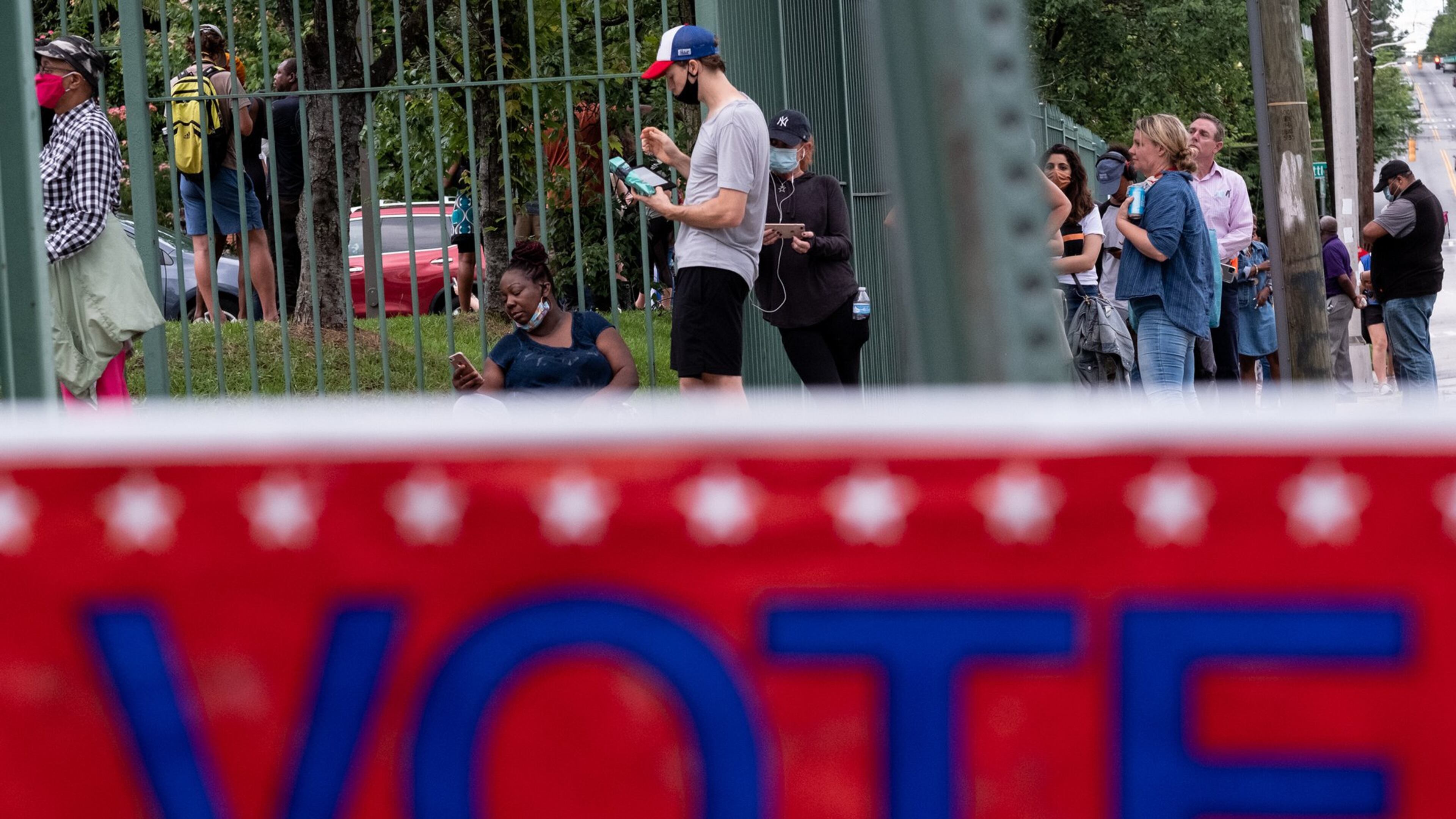
There are lots of ways to describe Georgia’s primary election, but no one would argue that it was anything less than an enormous embarrassment for the state. Some voters, particularly Black voters, were forced to wait for hours to cast their ballots while others breezed through without any trouble.
This is not the way democratic elections are supposed to work. But things like this keep happening here, and no one should have any confidence that they are going to stop any time soon since the state government now claims it is not responsible for fixing them. The question is whether Georgia’s business community is willing to tolerate being associated with what looks at best like sheer incompetence or at worst deliberate racism.
We are talking about the tourist industry that draws millions of visitors to attractions like Savannah’s historic district and the Atlanta Aquarium. We are talking about leading brands headquartered in Georgia like Coca-Cola, Home Depot and UPS. All of these, plus plenty of smaller companies, have long told potential employees and customers of the advantages of their state: warm weather, low taxes, cosmopolitan Atlanta, the New South, etc.
Failed elections tinged with racism do not fit with that picture. For many business leaders that alone will offend. For all of them, there ought to be the uncertainty whether connection with Georgia will affect their bottom line.
Just ask businesses in North Carolina. Its “bathroom bill” launched a boycott movement that cost the state hundreds of millions of dollars in conventions.
An even better example comes from Indiana where then-Gov. Mike Pence signed a “religious freedom” bill that critics charged gave businesses and organizations the right to discriminate against LGBTQ people. While a few businesses were overjoyed with the law, the vast majority were appalled because they felt it cast their state in a poor light.
They fought back. Angie’s List, headquartered in Indianapolis, canceled an expansion of its offices that would have brought an additional 1,000 jobs to the state. Salesforce suspended all activity in the state. The NCAA announced its intention to reevaluate its business there. Etc. Within months, the legislature passed an additional law adding LGBTQ protections.
There is no reason something similar could not happen in Georgia – especially since, unlike “religious freedom,” no one wants to make the argument publicly in favor of making it hard for Black people to vote. If business leaders spoke out, demanding immediate change, it is hard to imagine that would not succeed given who they are and the righteousness of their cause.
But what could they demand? Here are three very simple ideas given the repeated failures of the past few years:
- Commit to sending out absentee ballot request forms to every registered voter well before the November election. If there is one thing the primary proved, it is that Georgia cannot be trusted to handle in-person voting this November – especially given the potential for a resurgence of COVID-19. Absentee voting will help solve both problems, especially if it is organized early and leaders across the political spectrum rally behind it. The key thing is to make applications and ballots themselves easy to return and count. That means including postage, allowing centralized collection points, and giving voters a chance to fix any concerns about signatures or other problems with their ballots.
- Demand equality in in-person voting arrangements. Reports of long lines in some places versus no lines in others are unacceptable, but usually preventable. State election administrators should not tolerate more than minimal variations in the number of registered voters, election workers, training, and voting machines per precinct. No more situations where one polling place has five machines for 500 people while another has two for 1,000. Arguments about state versus county control are irrelevant when election failures make the whole state look bad – or when it is the state that has dictated what machines each county must use.
- Suspend all purges of registration rolls until after the fall election. One of the scandals from 2018 was Gov. Brian Kemp's move, while Secretary of State, to remove hundreds of thousands of names from the voter rolls in the midst of his own campaign for governor. We do not want to re-litigate that issue, but no one should want to repeat it this year either.
We are under no illusions that the issues with Georgia’s elections will be quickly or easily solved, or that its political leaders are in any rush to solve them. But we do believe those problems have become so visible that they cannot be ignored, even by people focused on other things.
Georgia’s business leaders may not have the luxury of ignoring their state’s broken elections any longer. Will they lead the charge to fix them?
Alan Abramowitz is the Alben W. Barkley Professor of Political Science at Emory University; Jonathan Krasno is professor of political science at Binghamton University.