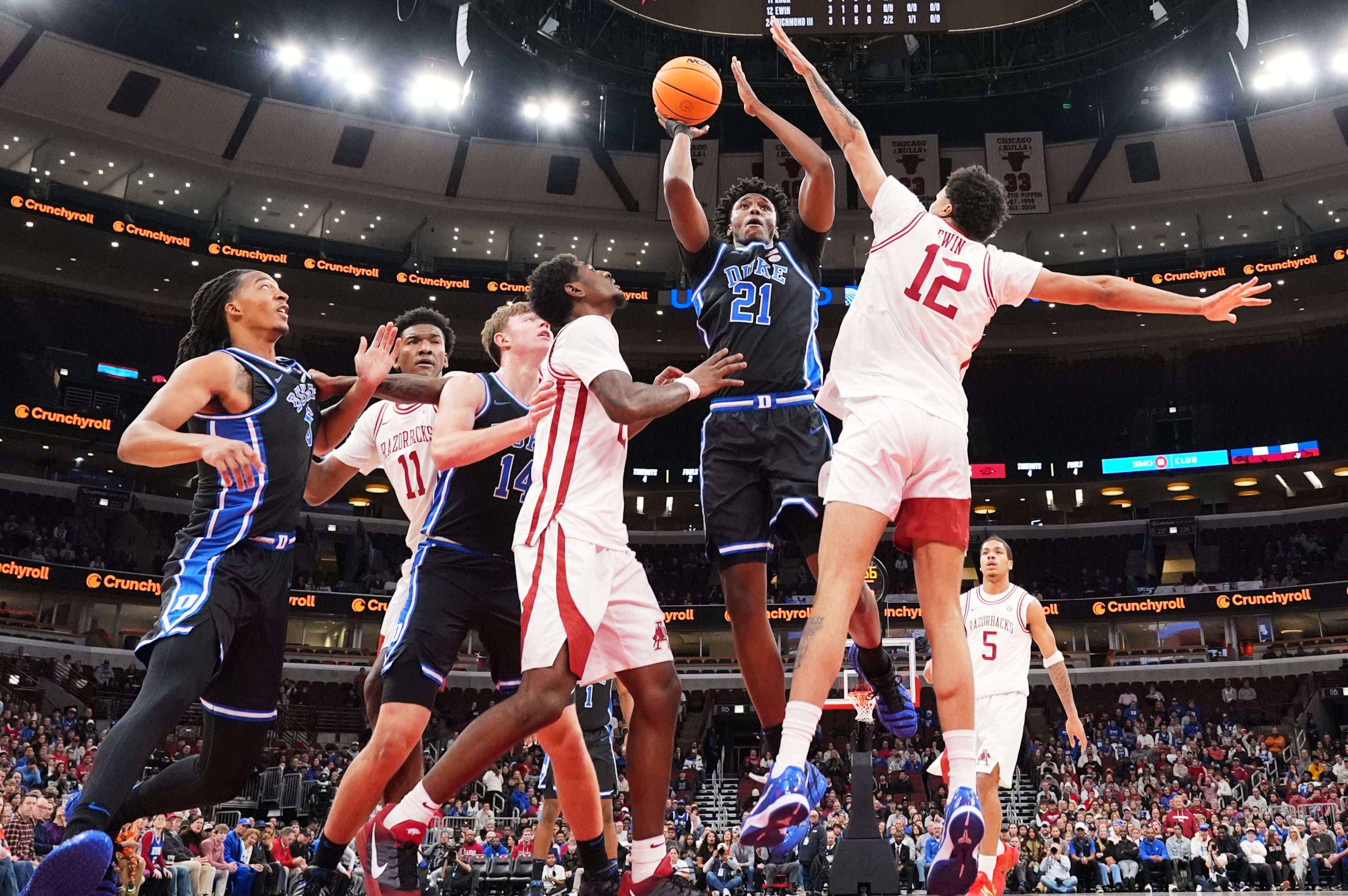
White House, Olympic leaders lend support to SCORE Act to regulate college sports

The White House and the U.S. Olympic and Paralympic Committee each lent support Tuesday for a bill designed to regulate college sports that has been criticized by opponents as a giveaway to the NCAA and its most powerful schools.
The House is expected to vote on the SCORE Act later this week. The NCAA-backed legislation has broad support from Republicans but is widely disliked by Democrats, who would need to provide at least seven votes for it to pass in the Senate.
A statement from the White House said the administration supports the bill.
“Urgent federal action is necessary to provide the stability, fairness and balance that will protect student-athletes and preserve collegiate athletic opportunities,” it said.
A key critic is Sen. Maria Cantwell, D-Wash., who has co-sponsored a competing bill and called the battle over the SCORE act “a David and Goliath fight” in which she says the two biggest conferences, the SEC and Big Ten, will end up with most of the power if SCORE is passed.
Cantwell told The Associated Press that some late changes in the bill made it worse than the original draft. One that stood out to her was a clause that gives the newly created College Sports Commission full authority to resolve disputes about payments from third-party companies to players, and prohibits players from seeking remedies outside the new system.
“It's safe to say there's a lot buried in here that people don't know or didn't see or never went through the committee process,” Cantwell said.
The USOPC had withheld its support, seeking changes that would bolster Olympic sports.
Though the types of changes the committee's leadership advocated were not placed into the House version of the bill, the USOPC signaled its support, saying it was ready to work with Senate leaders and others to “build a model that supports Olympic and Paralympic sport and reinforces the critical role college programs play in developing student-athletes.”
The NCAA and Division I conferences portray the bill as placing into law the rules created by the multibillion-dollar lawsuit settlement that allows college players to be paid.
The NCAA lobbied for three key elements in the bill: antitrust protections, pre-emption of state laws that regulate the payments to players, and a section that prevents athletes from becoming employees of their schools.
Those elements remain in the slightly revised version of the bill that will be debated Wednesday and could be voted on the same day.
Action on a procedural vote in the House to advance the bill Tuesday underscored the still-tenuous prospects for the legislation. After Republicans openly debated the bill on the floor, it was narrowly advanced to a final vote by just a single vote margin.
“There’s some people that have issues with the NCAA. That have issues that they don’t want the federal government to have to get involved in this,” said House Majority Leader Steve Scalise.
One notable addition to the latest version of the act was a clause prohibiting state attorney generals or other state officials from bringing civil action against the CSC before exhausting all arbitration and other remedies offered by the CSC.
Last month, the CSC sent out a contract that included similar language. The commission needs all 68 teams from Power Four conferences to sign the contract for it to go into effect.
But last week, Texas attorney general Ken Paxton sent out guidance to schools in his state urging them not to sign the CSC document, calling it “an egregious attempt to insulate CSC from legal challenges.”
“No entity should be allowed to arbitrarily give itself the type of legal immunity CSC is pursuing, especially by putting colleges and universities in the crosshairs,” Paxton said.
The bill appeared headed for passage over the summer, but hit roadblocks among Republican members who represented states with smaller Division I schools.
The NCAA negotiated to help those schools retain some of their decision-making power when it came to membership standards for Division I schools. That was part of an overhaul of its governance structure that helped open the door to the conferences supporting the legislation.
“The SCORE Act will establish stability and return national standards to college sports while supporting universities' educational mission,” SEC commissioner Greg Sankey said.
___
AP Congressional reporter Joey Cappelletti in Washington contributed.
___
AP college sports: https://apnews.com/hub/college-sports