Pope prays at site of 2020 port explosion on last day of trip
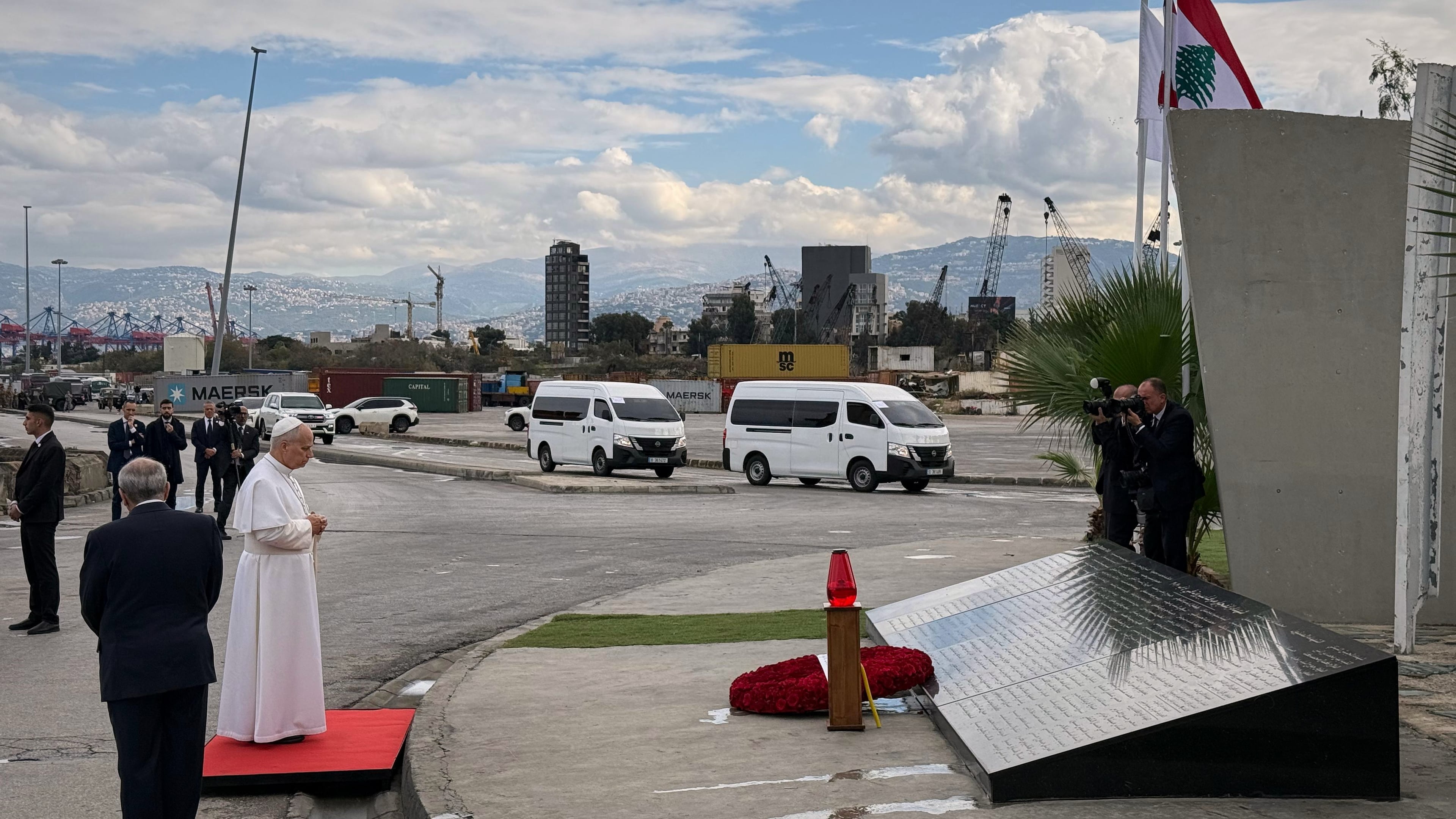
BEIRUT (AP) — Pope Leo XIV prayed Tuesday at the site of a deadly 2020 Beirut port explosion that has become a symbol of Lebanon’s dysfunction and official impunity as he offered words of consolation to Lebanon’s people on the final day of his first overseas trip.
Relatives of some of the 218 people killed by the blast held up photos of their loved ones as Leo arrived at the scorched site. They then stood side-by-side as he greeted each one in a line: Leo grasped their hands, spoke to each one and looked at the photos.
The emotional encounter took place next to the shell of the last grain silo standing at the site destroyed by the Aug. 4, 2020 blast and the piles of burned cars torched in its wake. The explosion did billions of dollars in damage as hundreds of tons of ammonium nitrate detonated in a warehouse.
Five years on, these families are still seeking justice. No official has been convicted in a judicial investigation that has been repeatedly obstructed, angering Lebanese for whom the blast was just the latest evidence of impunity after decades of corruption and financial crimes.
“The visit clearly sends the message that the explosion was a crime," said Cecile Roukoz, whose brother Joseph Roukoz was killed and who was on hand to meet the pope. "There should be a message, the country should end impunity and ensure justice is served.”
When he arrived in Lebanon on Sunday, Leo urged the country's political leaders to pursue the truth as a means of peace and reconciliation.
An emotional visit to the hospital
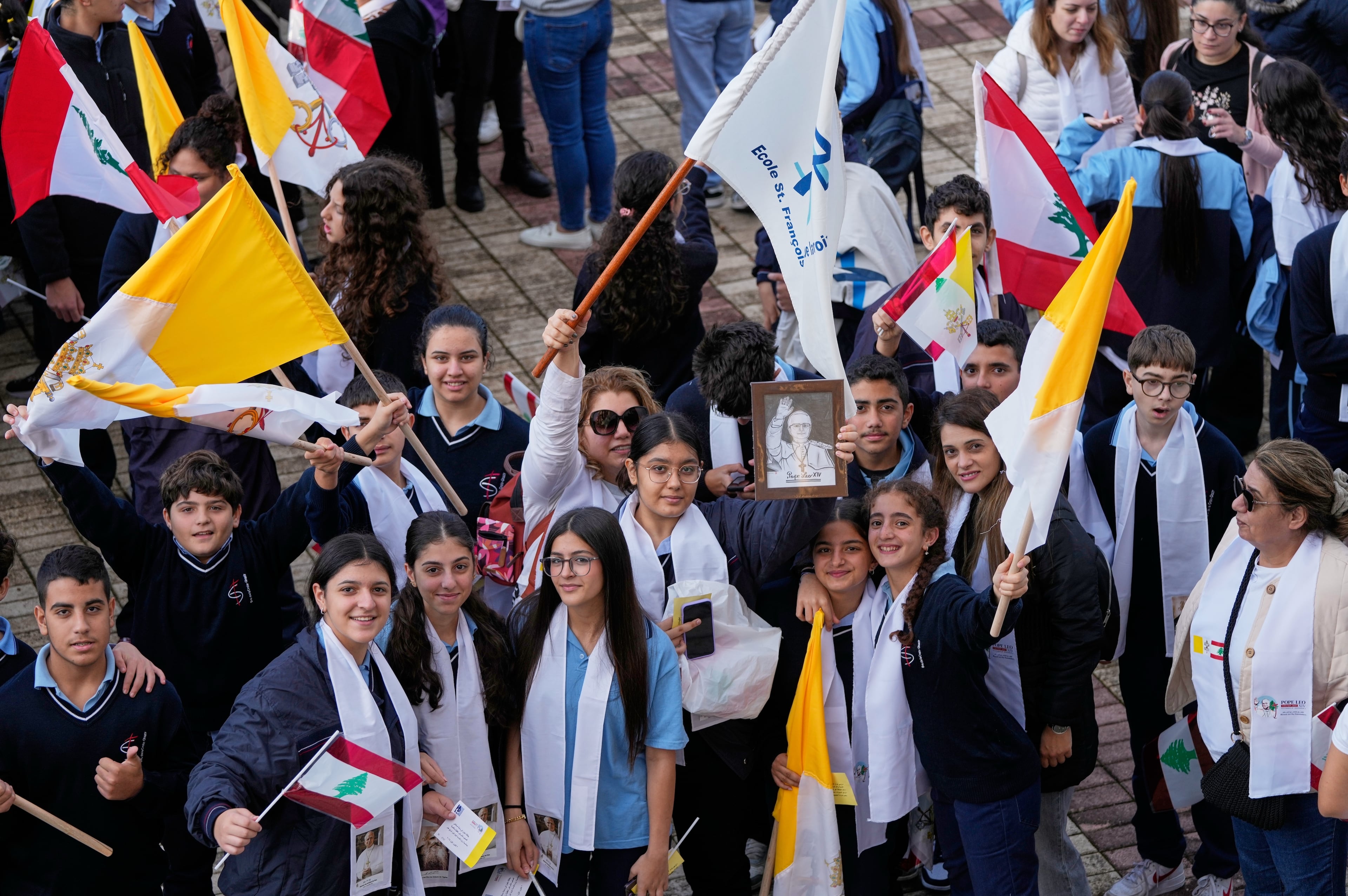
The American pope opened his final day in Lebanon with an emotional visit to the De La Croix hospital, which specializes in care for people with psychological problems. Awaiting him were some familiar-looking faces: Young boys dressed up as Swiss Guards and cardinals, and even one dressed as the pope himself in all white.
The mother superior of the congregation that runs the hospital, Mother Marie Makhlouf, was overcome as she welcomed the pope, telling him that her hospital cares for the “forgotten souls, burdened by their loneliness.”
Leo said the facility stands as a reminder to all of humanity. “We cannot forget those who are most fragile. We cannot conceive of a society that races ahead at full speed clinging to the false myths of wellbeing, while at the same time ignoring so many situations of poverty and vulnerability.”
Leo is expected to close his visit with a Mass along the Beirut waterfront before returning to Rome.
Thousands of Lebanese poured into the waterfront site for the Mass and along his motorcade route, overjoyed that a pope had finally managed to visit. Pope Francis had tried for years to come but was stymied first by its economic and political crises, and then by his own health problems.
“For Lebanon, (the visit) means a lot," said pilgrim Maggie Claudine, who was waiting for Leo at the hospital. "We hope that peace will prevail, and that is what we wish for. We want to live in comfort.”
Families of blast dead seek justice
Leo has sought to bring a message of peace to Lebanon as it copes with crises, the aftermath of Hezbollah's devastating war with Israel and the fallout from the port blast.
Among those on hand to welcome Leo at the blast site was Lebanon Social Affairs Minister Haneen Sayed, whose mother was killed. Another was Mireille Khoury, whose 15-year-old son, Elias, was killed.
Khoury said Lebanon cannot heal from its wounds without justice and accountability. She has been among the relatives who have called for finalizing the investigation that implicated a long list of political, security and judicial officials.
The families have gathered monthly since the explosion to honor the victims and urge the international community to support the probe into the blast, which has been obstructed by officials who have largely refused to cooperate.
“Justice is the basis of building any country,” she told The Associated Press in an interview before the pope arrived in Lebanon. “Our children were killed in their homes. They were killed because someone kept (ammonium) nitrate in the main port of the city near a residential area.”
Khoury said the pope’s prayer and support would bring some relief, but said she would not give up on her pursuit for justice.
“I will not say that this anger will fully just disappear,” Khoury said. “But I think it will give some sort of relaxation of this anger that is in my heart until justice is served.”
——
Mroue reported from Jal el-Dib, Lebanon. Associated Press journalist Fadi Tawil in Beirut contributed.
___
Associated Press religion coverage receives support through the AP’s collaboration with The Conversation US, with funding from Lilly Endowment Inc. The AP is solely responsible for this content.
More Stories
Keep Reading