Arizona attorney general sues Chinese online retailer Temu over data theft claims
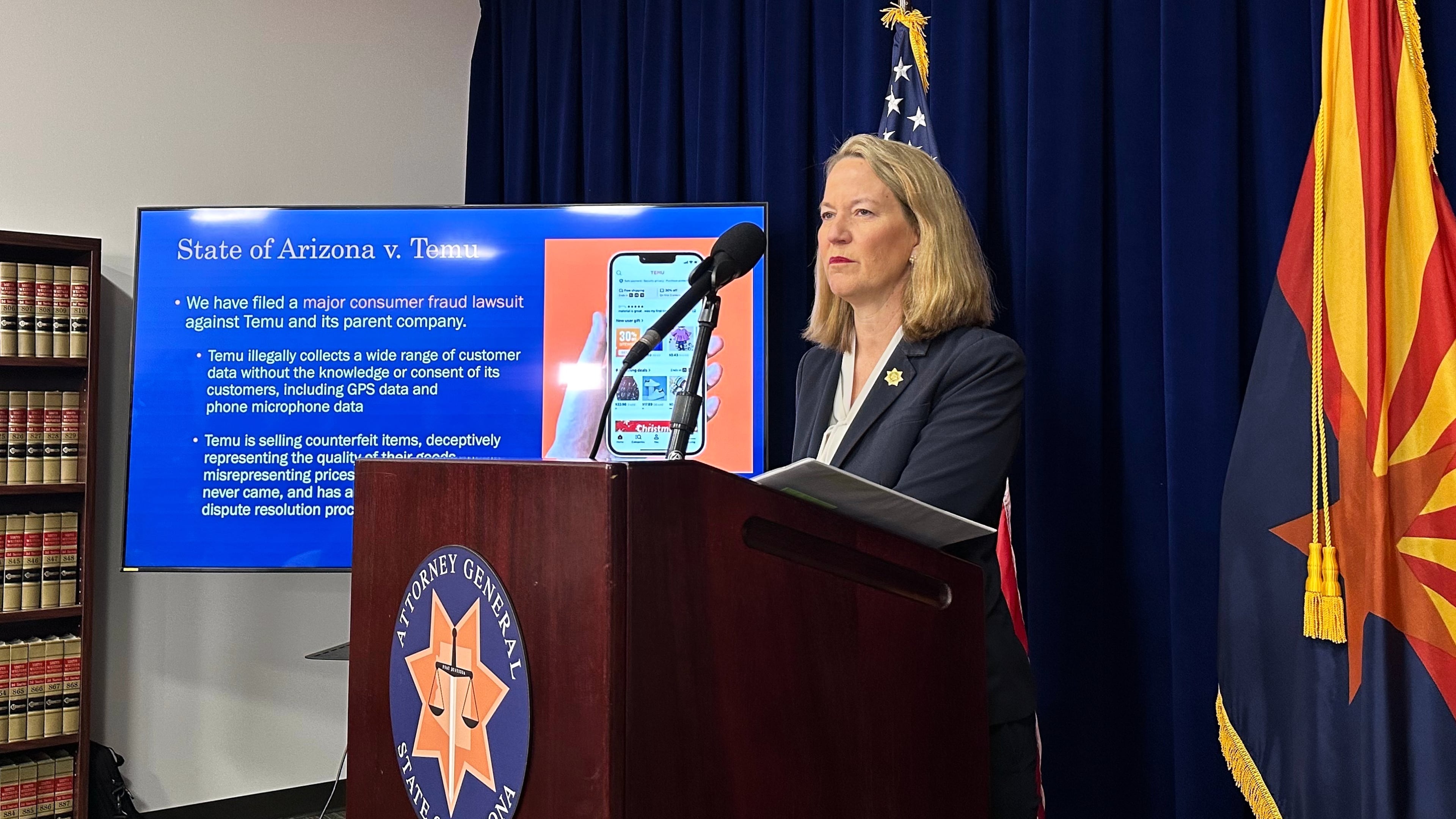
Arizona Attorney General Kris Mayes announced Tuesday that Arizona is the latest state to sue Temu and its parent company PDD Holdings Inc. over allegations that the Chinese online retailer is stealing customers’ data.
Mayes said the app deceives customers about the quality of its low-cost products and collects what she described as a shocking amount of sensitive data without the consent of users, including GPS locations and a list of other apps on users' phones.
According to the lawsuit, prosecutors are concerned about Temu being subject to laws in China that require Chinese companies to hand over data requested by the government, and that its code is designed to evade security reviews.
“It can detect everywhere you go, to a doctor’s office, to a public library, to a political event, to your friends' houses," Mayes said during a news conference. “So the scope of this invasion of privacy is enormous, and that’s why I consider it possibly the gravest violation of the Arizona Consumer Fraud Act that we have ever seen in Arizona.”
Arizona's top prosecutor also said the state wants to protect businesses from being “ripped off” by the online retailer, alleging the company has copied the intellectual property of brands that include the Arizona Cardinals and Arizona State University.
Attorneys general in Kentucky, Nebraska and Arkansas have filed similar lawsuits in recent years.
There have been legislative efforts at the federal level to counter China’s influence, especially when it comes to technology and intellectual property. But Mayes suggested there should be greater intervention by the federal government to protect consumers.
Mayes called the allegations against Temu more egregious than those that have been made against TikTok.
Through a forensic review, investigators in Arizona found the app’s code has portions recognized by experts as malware or spyware and allows exfiltration of data from a user’s mobile device while concealing that the app is doing so. The review also found in the app “large swaths” of previously banned code from the platform’s precursor version.
Mayes urged Arizonans to delete their Temu accounts, uninstall the app and scan their devices for malware.